NASA/CubeRover
Turning Extreme Complexity Into Clear Decisions
Company
NASA/CubeRover
My role
Lead Product Designer:
System architecture
Workflows
Prioritization
Mission critical-validation
Overview
Built a Mission-Critical Decision System for Lunar Exploration
Navigation and data-capture platform for NASA’s CubeRover program
NASA’s CubeRover program aimed to prove that a 25kg, privately funded lunar rover could safely navigate the Moon and collect scientific data at a fraction of traditional mission cost.
I led the design of the rover’s core operational platform, turning extreme uncertainty into clear, reliable decisions for mission control.
Outcome
Enabled the World’s First Private Lunar Rover Mission
Designs shipped into live space operations
The platform was accepted and implemented into the CubeRover program that sent the world’s first compact private lunar rover to the Moon in 2021.
Client feedback highlighted that the solution resolved known operational issues while surfacing and mitigating risks the team hadn’t previously identified.


THERE IS NEVER A SECOND CHANCE TO BE THE FIRST.
Challenge
Solving High-Risk Decisions With Limited Data
One-shot mission, no real-time feedback, conflicting systems
Operators had to navigate hazardous terrain and capture meaningful scientific data using minimal hardware — without the ability to iterate mid-mission.
Multiple subsystems with conflicting requirements had to function as one reliable mission flow.
Strategy
Uncovering a New “Why” Through Collaborative Alignment
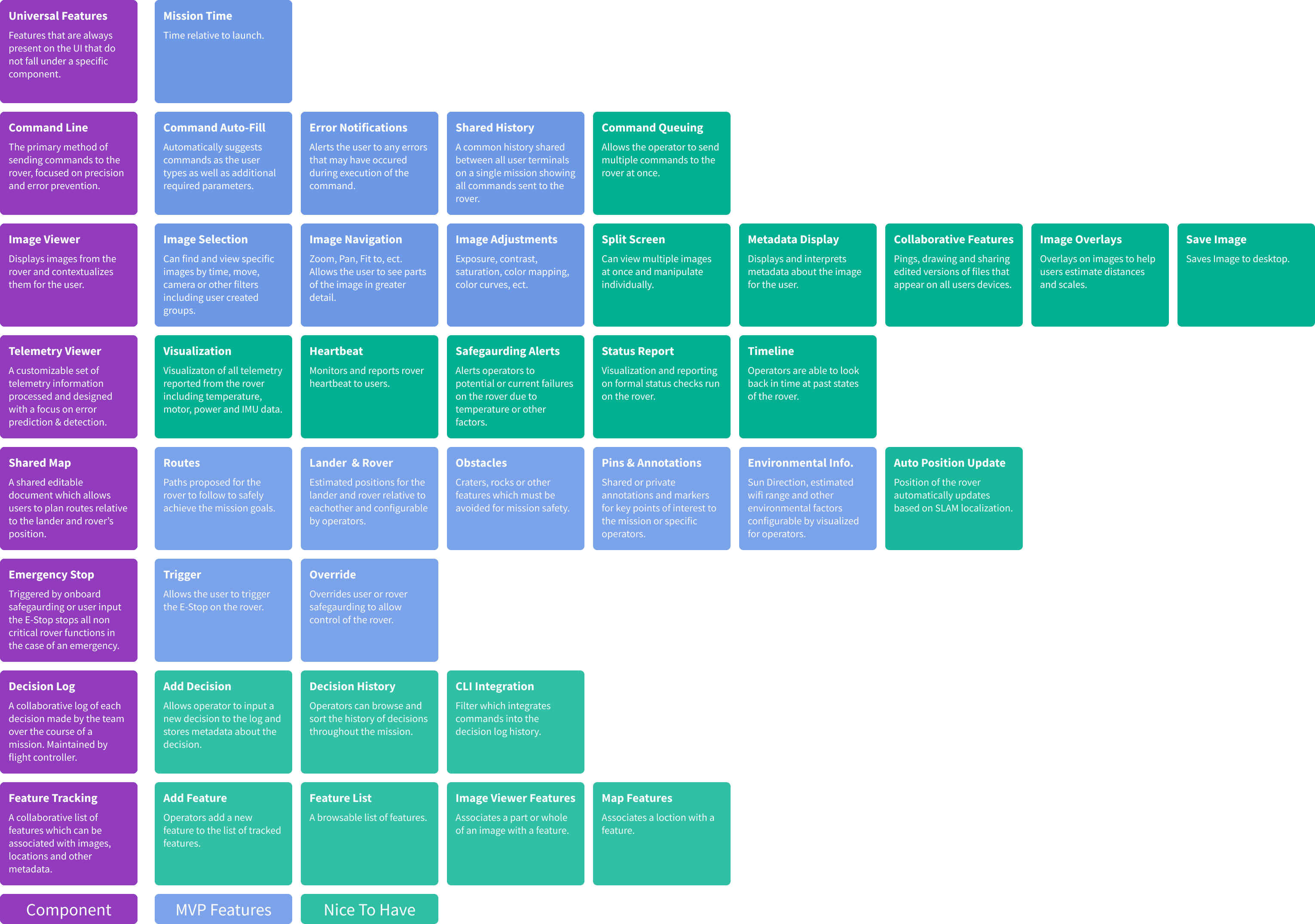
Rather than treating each tool independently, I reframed the product as a unified decision system optimized for risk reduction and clarity.
Prioritization focused on eliminating the most common failure modes revealed through simulations — particularly route uncertainty and data integrity — while enforcing consistency across subsystems even when it slowed short-term feature delivery.
Execution
Bridging Brand to a Seamless Owned User Journey
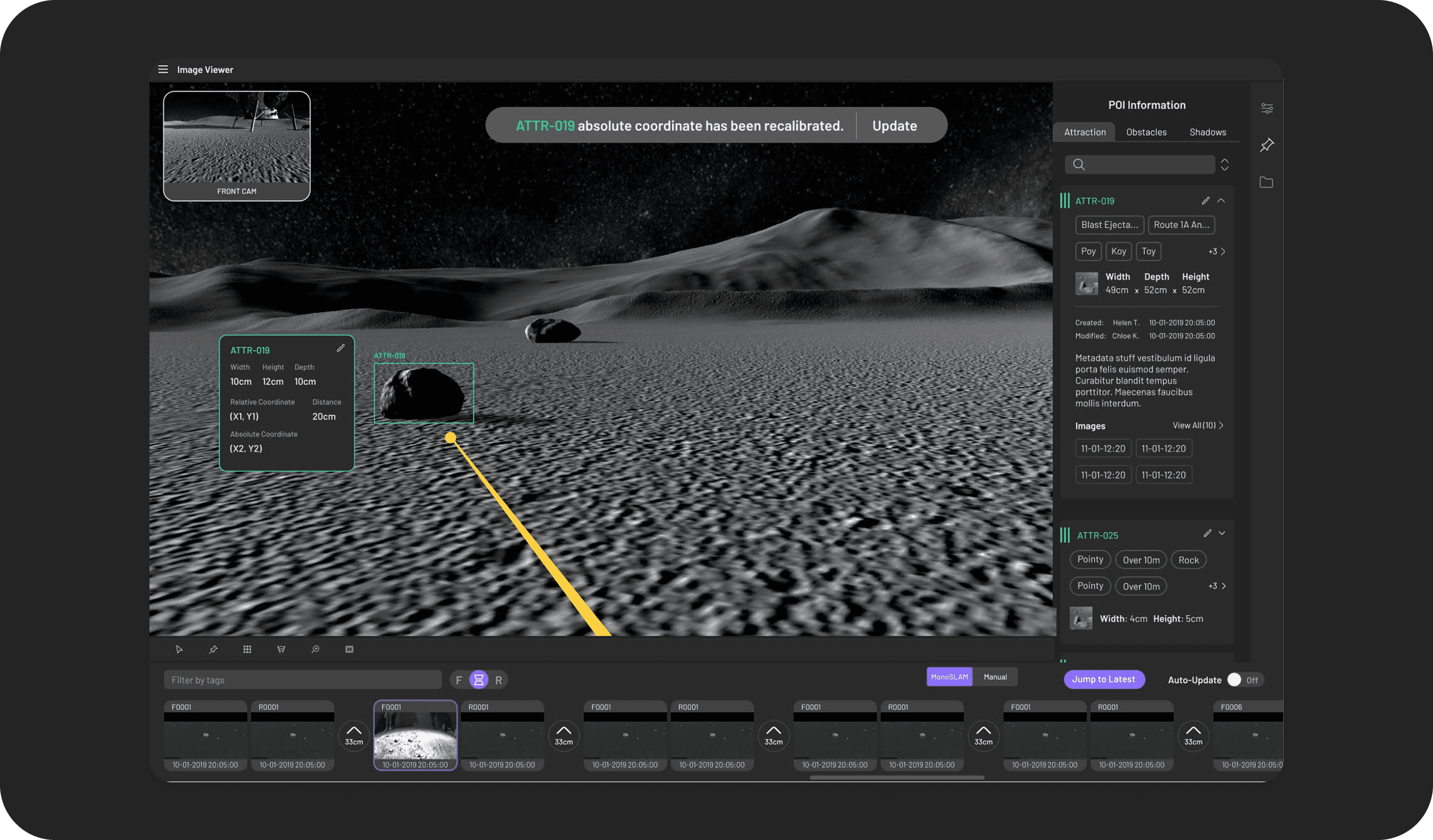
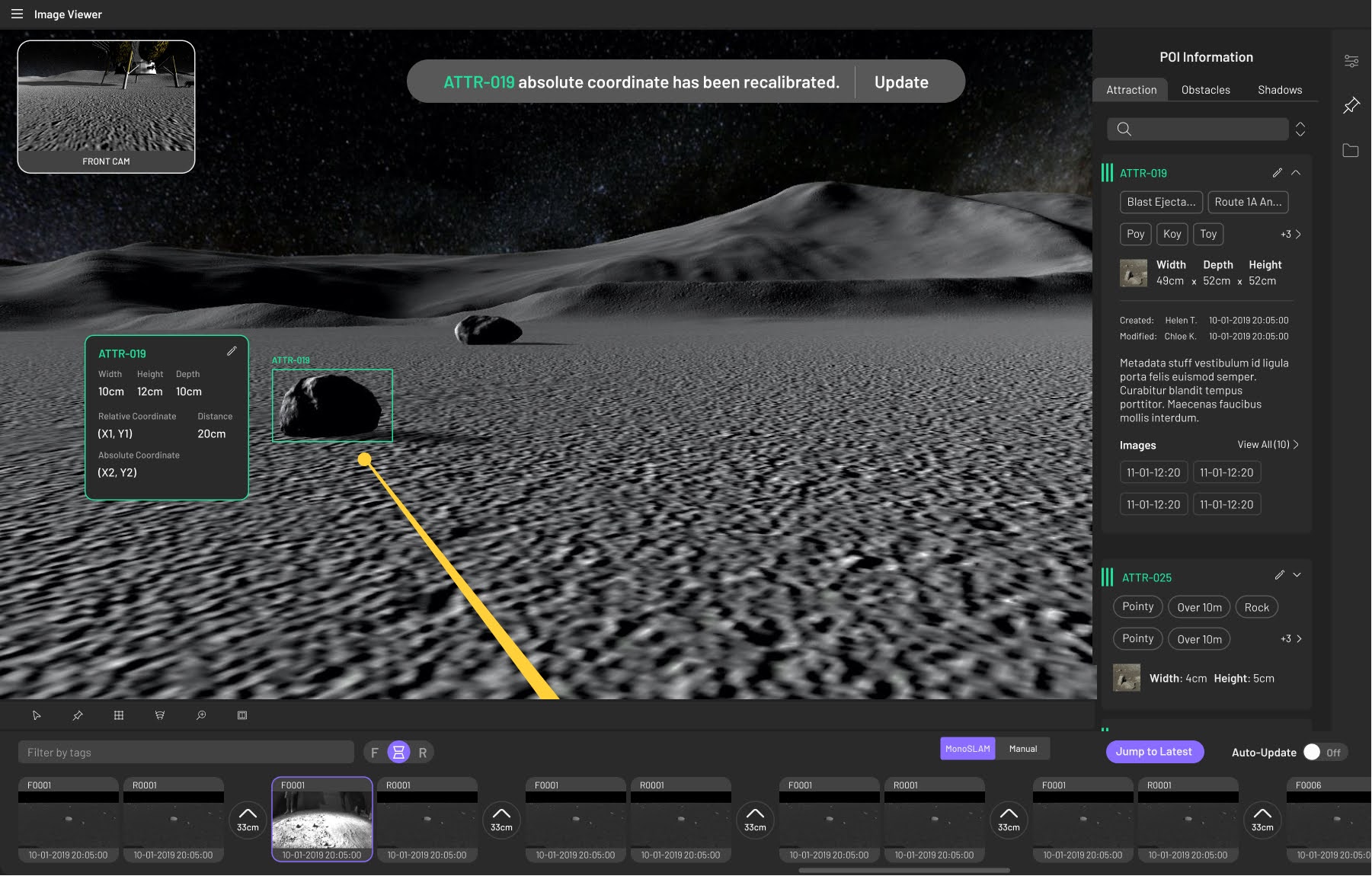
I designed end-to-end workflows that supported spatial reasoning, made terrain risk legible through confidence indicators, and embedded scientific capture directly into navigation.
To prevent fragmentation across teams working in parallel, I co-built a standardized component system that ensured reliability and unblocked parallel development across the platform.
All major workflows were validated through repeated mission simulations rather than traditional usability testing.
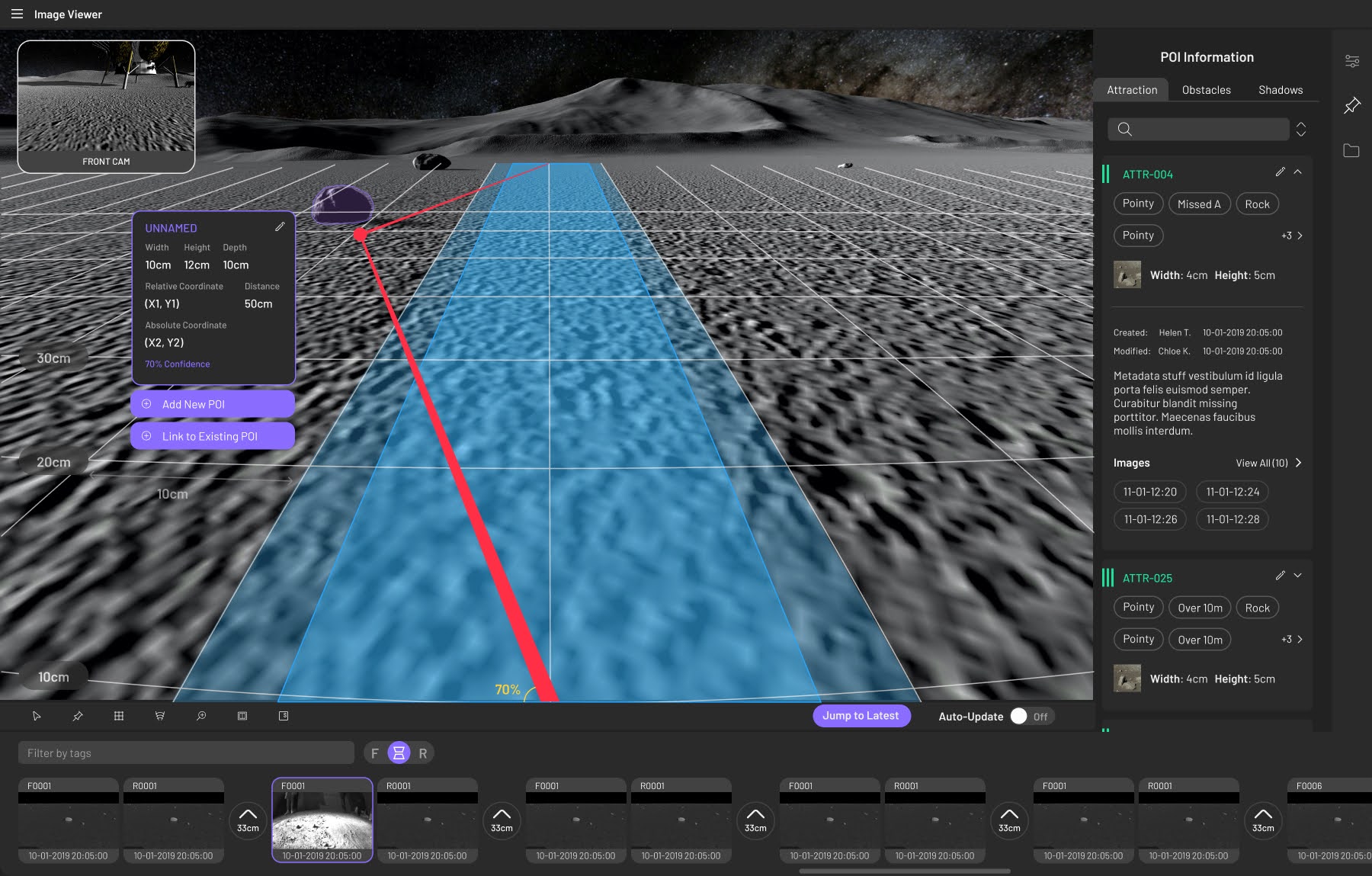
Lead mission control in gathering data quickly
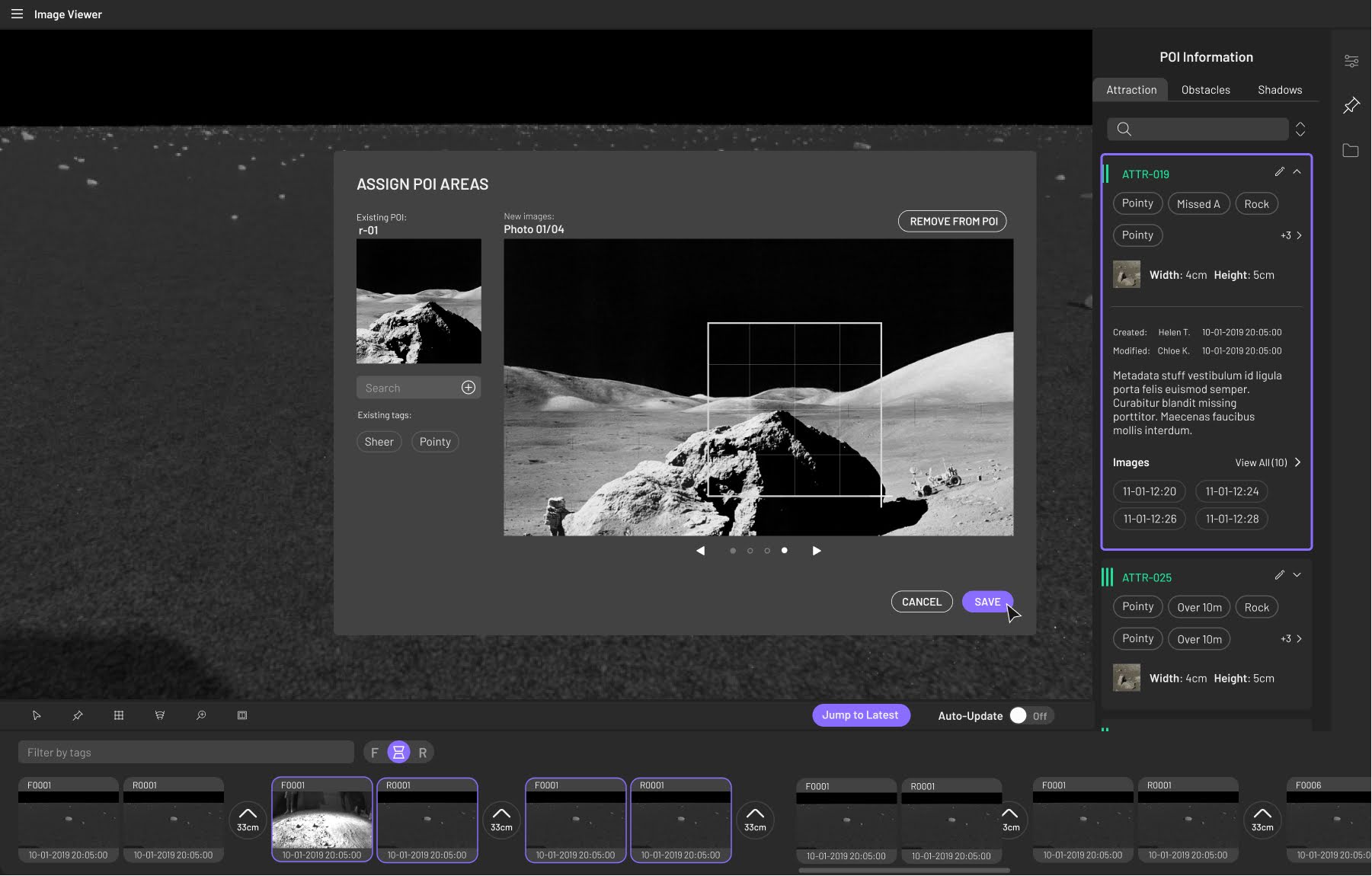
Structured data capture ensured scientific integrity while reducing operator cognitive load.
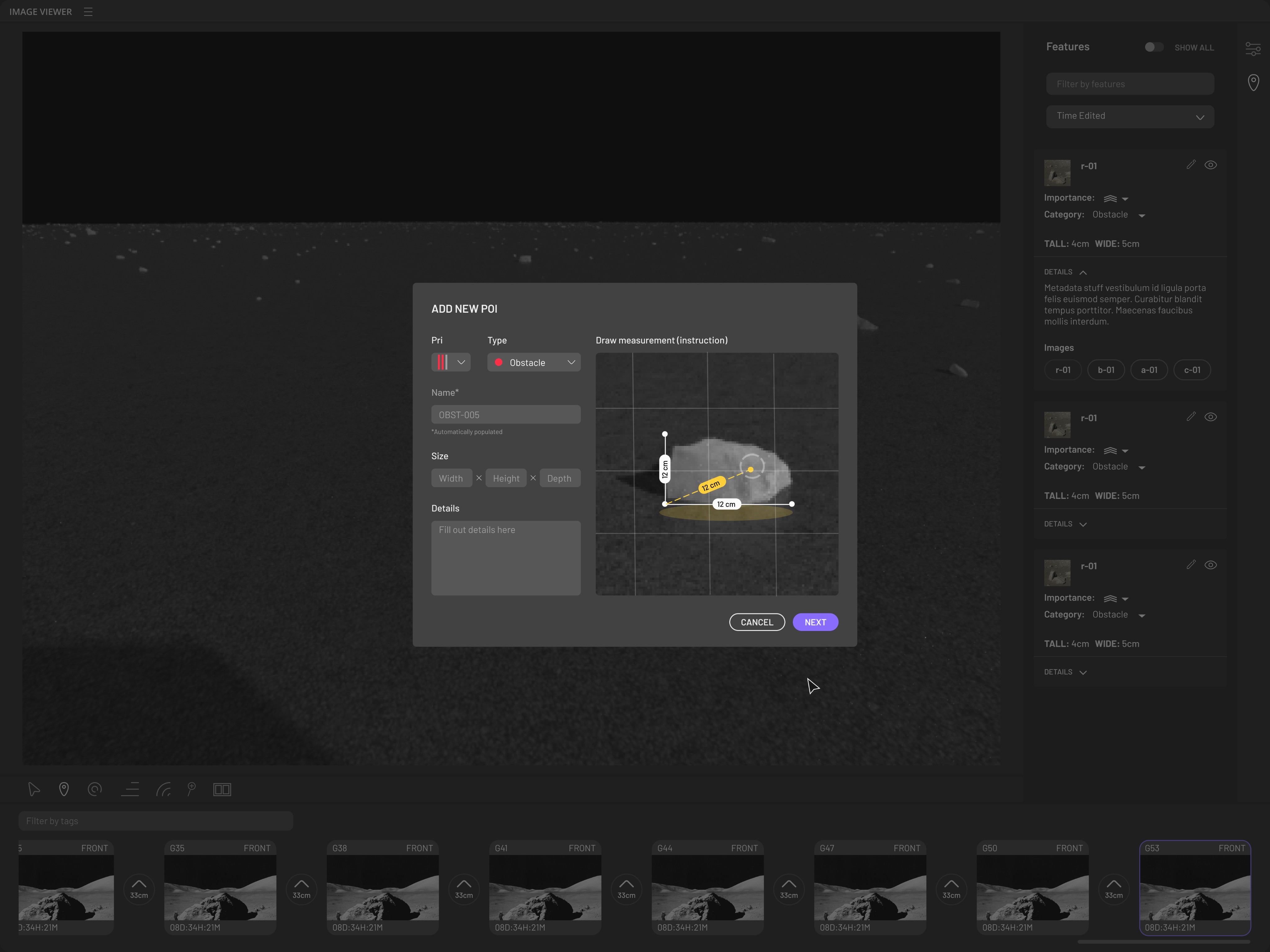
Embedded capture directly into navigation prevented data loss during time-critical operations.
My Role
Facilitator, Strategist and Hands-On Designer
Lead Product Designer owning UX strategy, system architecture, workflow design, prioritization decisions, and simulation-based validation.
I partnered closely with engineers and mission operators to translate technical constraints into resilient, decision-focused systems.
Add POI
Add tag
POI Management Home Screen
Organize Content
Search
View IMG Properties
By POI Name
By Types
By Time
Importance
(optional)
By Tags
View POI Cards
Edit POI card
& content
Manage
POI Tags
Add
Edit
Delete
Sort
If IMG Selected
If POI Selectted
TAG Management Home Screen
TAG Directory
When Select a Tag
Edit Tags
Delete Tags
Add New Tag
View Tag Properties
Centralized mission workflows enabled rapid, high-confidence decisions under one-shot mission constraints.
Impact
A Scalable Business That Attracted Acquisition
The platform directly enabled the successful deployment of the first private lunar rover mission, prevented cross-system fragmentation, and accelerated development across a large cross-functional team.
More importantly, it shifted the program toward designing for decision clarity and system resilience as core measures of success for future missions.

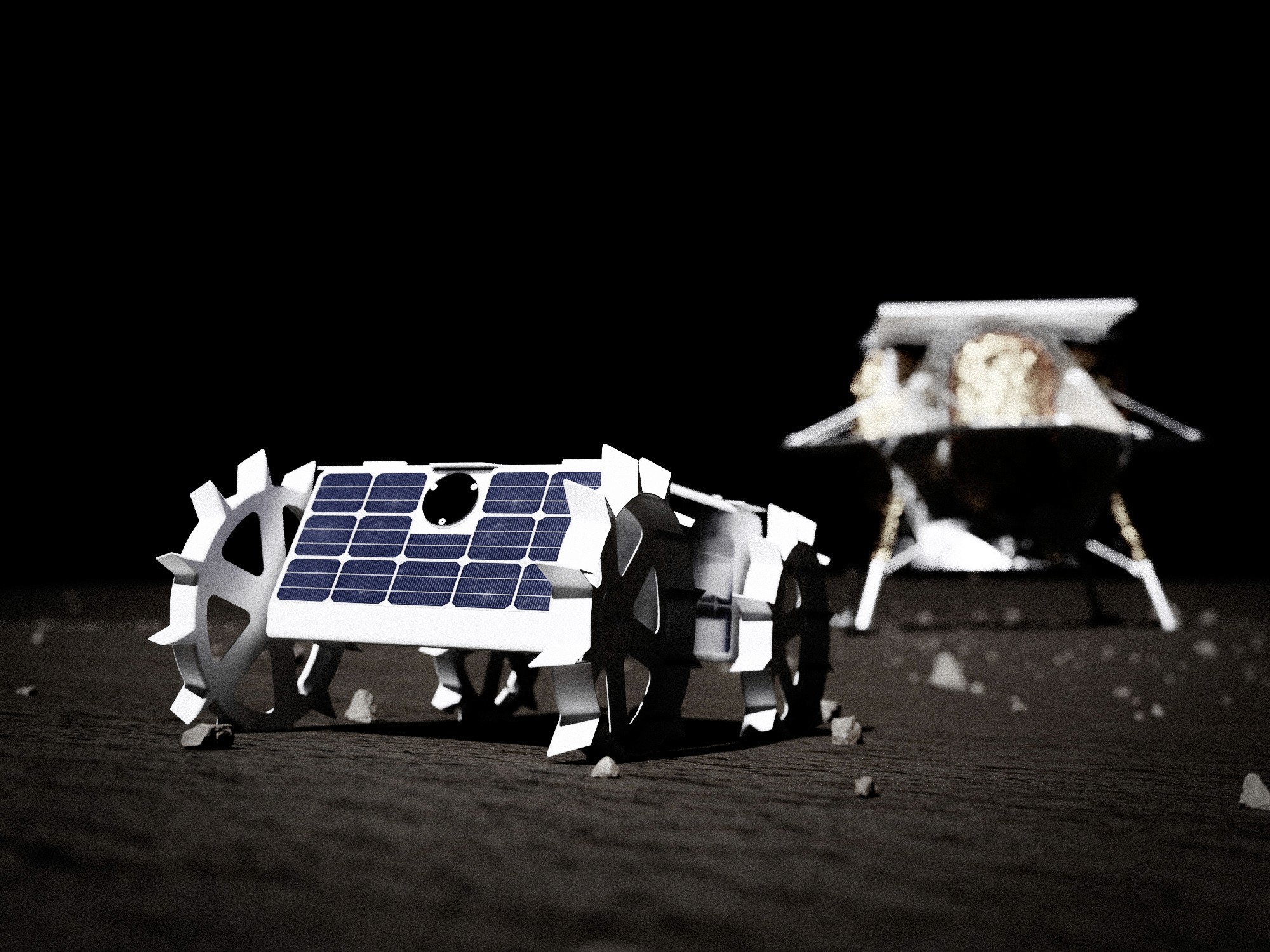
3D rendering of the rover deployed on the moon
Reflection
Designing for Irreversiblity
When failure isn’t recoverable, clarity becomes the product.
This project reinforced that mission-critical systems must prioritize trust, resilience, and decision confidence over feature depth.
By unifying fragmented tools into a single operational workflow, complexity shifted from something operators managed to something the system absorbed.
It reshaped how I approach high-stakes design: build for reliability first — everything else is secondary.
PRESS
“NASA Announces New Tipping Point Partnerships for Moon and Mars Technologies”
NASA.gov
Next Project
Adaptive AI Interviewing
At Survey Scale
Go to Next Project
Take me back home.